Why Iron Matters for Performance
Iron is the driver behind oxygen delivery.
It’s a key component of haemoglobin, the protein in red blood cells that transports oxygen from your lungs to the rest of your body.
Without enough iron, your “oxygen highway” slows down, meaning your muscles, brain, and organs don’t get the fuel they need.
Low iron levels can lead to:
- Reduced stamina – you tire quicker, even with regular activity
- Sluggish recovery – whether from exercise or just a busy day
- Brain fog and low mood – your brain needs oxygen as much as your muscles do
In short: without enough iron, you’re running on empty.
How Much Do You Need?
Your iron requirements depend on age and gender:
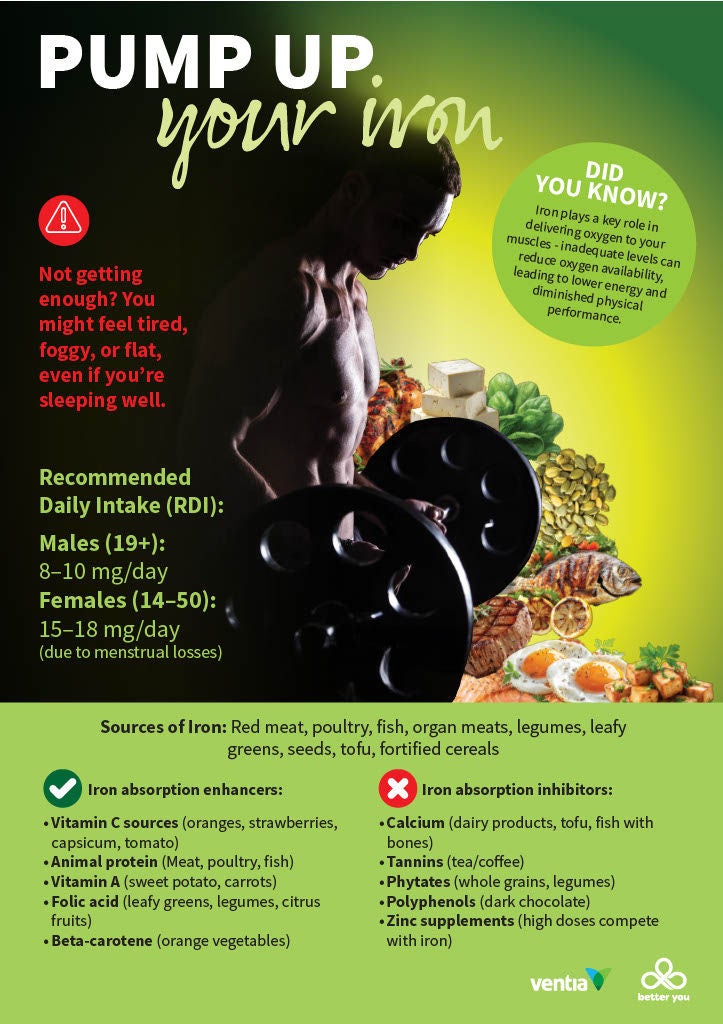
- Men (19+): 8–10 mg/day
- Women (14–50): 15–18 mg/day (due to menstrual losses, women often need nearly double)
Those who push their bodies and minds hard, whether in the gym, boardroom, or long workdays—may have even higher demands.
Where to Get Your Iron
Iron comes in two forms:
- Haem iron (easier to absorb): Red meat, poultry, fish
- Non-haem iron (plant-based): Legumes, tofu, spinach, fortified cereals, nuts, seeds
If you follow a plant-based diet, you can absolutely meet your needs—it just requires a little extra planning to maximise absorption.
Iron Absorption: What Helps and What Hurts
You might be eating iron-rich foods but still not absorbing them well. Here’s what makes the difference:
Boosters (help your body absorb iron):
- Vitamin C: Citrus, berries, capsicum, tomatoes
- Animal protein: Meat, poultry, fish
- Vitamin A & Beta-carotene: Sweet potato, carrots, leafy greens
Blockers (best to separate from iron meals):
- Calcium: Dairy, fortified plant milks, tofu
- Tea & coffee: Tannins slow down absorption, best to keep them 1–2 hours away from iron meals
- Whole grains & legumes: Contain phytates, great for health overall, but can reduce absorption
- Dark chocolate & wine: Contain polyphenols (timing is key here)
- High-dose zinc supplements: Compete with iron for absorption
Who’s Most at Risk of Low Iron?
Groups that need to pay particular attention include:
- Women of reproductive age (higher needs due to menstrual losses)
- People with demanding schedules (juggling work, training, or long days)
- Plant-based eaters (non-haem iron is less efficiently absorbed)
- Adolescents (rapid growth + busy lifestyles)
- Anyone restricting calories (less overall intake = less iron)
Practical Tips to Pump Up Your Iron
- Add beef stir-fry with capsicum and broccoli (iron + vitamin C for better absorption)
- Pair tofu or lentil curries with tomato or citrus dressings
- Start the day with fortified cereal and berries
- Enjoy coffee or tea between meals, rather than with your iron-rich foods
And if you’re constantly running on low energy despite good sleep and nutrition, it’s worth checking your iron levels with a simple blood test. Sometimes food alone isn’t enough, and supplementation may be required—but only under guidance, as too much iron can cause problems too.
By fuelling smart with iron-rich foods and understanding how to optimise absorption, you’ll unlock better energy, sharper focus, and greater stamina for whatever your day demands.